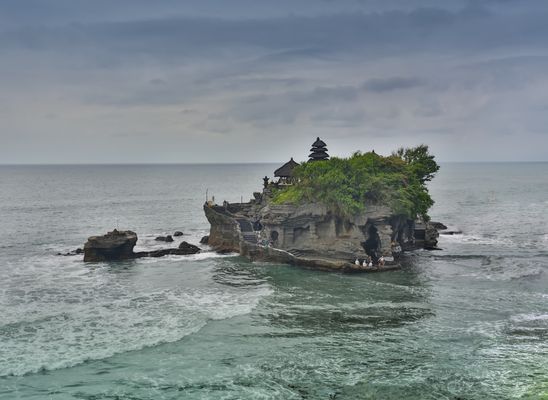
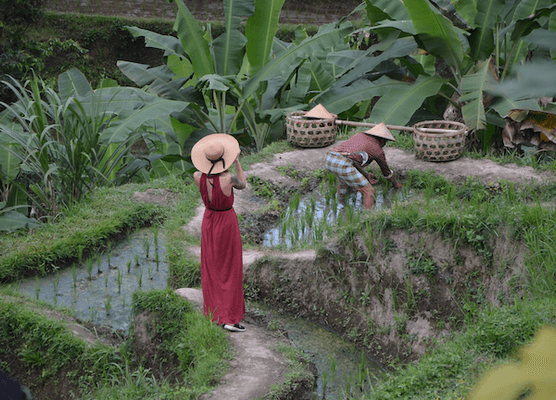
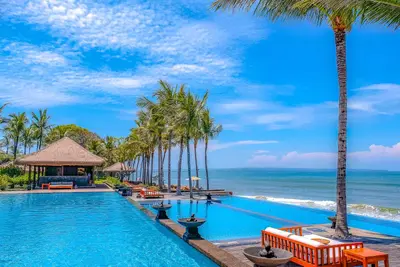
Bali is known for its temples, beaches, lush rice fields, and artistic traditions. But tucked away on a quiet hill in the luxurious resort area of Nusa Dua lies a place that reveals a very different side of the island. A side rooted not in landscapes, but in human values.
This place is Puja Mandala.
At first glance, it resembles a beautifully designed religious complex. But look closer, and you realize something extraordinary. Standing side by side in one shared compound are five functioning houses of worship, each dedicated to a different religion practiced in Indonesia. A grand mosque. A Catholic church. A Protestant church. A Balinese Hindu temple. A Buddhist temple.
There is no segregation, no walls separating one faith from another. Only open pathways, shared courtyards, and a sense of quiet respect. For many travelers, a visit to Puja Mandala becomes one of the most moving and unforgettable experiences in Bali.
This is more than a tourist site. It is living proof that diversity is not something to be feared. It is something to be embraced.
What Is Puja Mandala?
Puja Mandala translates to “a place of worship.” It was developed in the 1990s as a spiritual center that could serve the religious needs of Bali’s multi-cultural population, especially within the rapidly developing Nusa Dua tourism area.
Rather than building separate religious facilities in different places, community and government leaders decided to create one shared plaza. The goal was not just practicality, but symbolism: a physical space where people of different faiths could pray, coexist, and interact peacefully.
The five houses of worship include:
- Masjid Agung Ibnu Batutah – Islamic mosque
- Gereja Katolik Maria Bunda Segala Bangsa – Catholic church
- Gereja Kristen Protestan Bukit Doa – Protestant church
- Pura Jagat Natha – Hindu temple
- Vihara Buddha Guna – Buddhist temple
Each functions independently with its own religious schedule and community, yet all stand side by side in harmony.
The Experience: Walking Through a Landscape of Faith
The approach to Puja Mandala is quiet and unassuming. There are no crowds, no busy markets, and no aggressive sellers. Instead, you’ll find peaceful pathways, landscaped gardens, and an atmosphere that invites reflection.
As you walk through the complex, you move seamlessly from one faith to another. The transitions are gentle and symbolic, like turning the pages of a living history book.
The mosque stands tall with its dome glimmering beneath the sky. During prayer times, the call to prayer rises through the air, echoing warmly across the open space.
A short walk away, the Catholic church fills with light filtered through its stained-glass windows. The interior is serene, marked by polished wooden pews and a sense of deep stillness.
Nearby, the Protestant church feels welcoming, bright, and intimate, reflecting a different style of worship but the same devotion.
The Hindu temple, richly decorated with stone carvings and ceremonial elements, carries the familiar scent of Balinese incense. Offerings are placed at shrines, and prayer bells echo softly in the background.
The Buddhist monastery completes the circle with its golden statues and meditative ambiance. It feels like a world within a world, where silence becomes a form of prayer.
Though each space is unique, none feels isolated. Together, they create an environment where many voices form one quiet harmony.
Why Puja Mandala Matters
Puja Mandala is not only a religious site. It is a cultural statement about Indonesia and, more specifically, about Bali.
Indonesia is home to hundreds of ethnicities and multiple major religions. Its national motto, Bhinneka Tunggal Ika, means “Unity in Diversity.” Puja Mandala is a living expression of that belief.
In a global climate often marked by division, this place stands as a reminder that unity is possible without uniformity. Respect does not require agreement. Peace does not require sameness.
This is what makes Puja Mandala one of Bali’s most important cultural experiences, even though it is not often included in mainstream tourist itineraries. The spiritual value here is not only in prayer, but in coexistence itself.
Why Travelers Appreciate Puja Mandala
Travelers who visit Puja Mandala often describe it as one of the most surprisingly meaningful places they experience in Bali. There are several reasons for this:
- It is peaceful and uncrowded
- It offers a deep cultural and spiritual perspective
- It feels authentic and non-commercial
- It represents real daily life rather than staged tradition
- It connects travelers to Bali beyond beaches and temples
Puja Mandala is especially impactful for those interested in culture, interfaith harmony, architecture, and human stories. It is also an ideal destination for slow travel or mindful tourism.
Practical Visitor Information
Location
Nusa Dua, South Kuta, Bali
Approximately 30 minutes from Ngurah Rai Airport
Opening Hours
Open daily
Houses of worship have individual schedules
Entrance Fee
No entrance fee is required
Donations are welcome
Dress Code
Modest clothing is recommended
Some places offer sarongs or head coverings if needed
Best Time to Visit
Morning or late afternoon for cooler weather and softer light
Avoid major prayer times if seeking quiet photography
How to Get There
- Taxi or private driver
- Grab or Gojek
- Scooter or rental car
- Part of a cultural day tour or Nusa Dua day trip
What to Do at Puja Mandala
Walk Through the Entire Complex
Take your time and observe each building and its details.
Learn About Each Religion
Signs and plaques offer explanations, and staff or worshippers sometimes answer questions.
Photograph Thoughtfully
The architecture is beautiful, but always ask before photographing people or entering prayer spaces. For more photogenic locations, explore our guide to Bali's most Instagrammable monuments.
Sit in Silence
Find a corner, listen to the wind, observe, reflect, and simply be present.
Attend a Service or Ceremony
Some services are open to the public. If allowed, attending one can be a powerful cultural experience.
Nearby Places to Combine with Puja Mandala
Because Puja Mandala is located in Nusa Dua, it can easily be included in a half-day itinerary. Popular nearby attractions include:
Nusa Dua Beach
A calm, clean, family-friendly beach ideal for swimming.
Waterblow
A natural rock formation where waves crash dramatically into the cliffs.
Museum Pasifika
A collection of Southeast Asian, Polynesian, and Indonesian art.
GWK Cultural Park
Home to one of the tallest statues in the world, cultural performances, and stunning landscapes.
Bali Collection
Shops, restaurants, spas, and cafes for relaxing after your visit.
Tips for a Respectful Visit
- Keep your voice low
- Dress modestly
- Do not interrupt ongoing services
- Do not step on offerings
- Ask permission before taking photographs of worshippers
- Avoid walking directly in front of people who are praying
- Move slowly, observe carefully, and approach with humility
This is a functioning religious complex, not a tourist attraction. Respect is the foundation of a meaningful experience here.
The Emotional Landscape of Puja Mandala
Many visitors expect Puja Mandala to feel like a museum or cultural site. But instead, what they find feels surprisingly intimate.
You might hear the faint sound of chanted scripture overlapping with the call to prayer. A Christian choir rehearsing while Balinese women place offerings outside the temple gates. Children in school uniforms walking past monks in saffron robes.
Life unfolds gently here. It feels timeless but not staged. Inclusive but personal. Public yet deeply sacred.
That emotional impression, more than any architectural feature, is what lingers long after the visit ends.
Reflection and Closing
There are places in Bali that take your breath away with their beauty. Puja Mandala does something different. It calms your breath. It reminds you to slow down, to listen, to reconsider what it means to live peacefully in a world of differences.
This place quietly teaches that unity does not require sameness. Respect does not require agreement. Faith can be individual, but community can be shared.
As the sun drops behind the hill and the final calls to prayer echo against the soft evening sky, the entire complex glows in the same light. Each religion stands distinct, yet none stand apart.
And in that moment, you understand something important about Bali. The island is not only a place of natural beauty, but a place of human wisdom. What makes Bali unforgettable is not only what you see, but how this place invites you to feel.
Puja Mandala is not a destination many find by accident. But those who do often leave with a new awareness, a new appreciation, and a quiet sense of hope.
Because Bali, at its core, is not only about landscapes, ceremonies, or temples. It is about people. It is about values. It is about harmony. To understand more about the people, delve into the cultural origins of Balinese personal names.
And that is the real magic you discover here.